Overview
India Wildlife Heritage Tour
This 8-night Golden Triangle with Wildlife tour combines history,
architecture, and adventure.
Begin in Delhi, exploring its vibrant culture, Mughal monuments, and
colonial heritage.
Travel to Jaipur, the Pink City, known for royal palaces, forts, and
traditional bazaars.
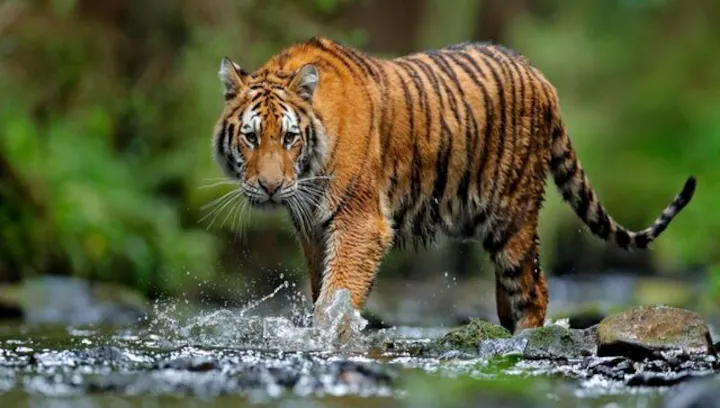
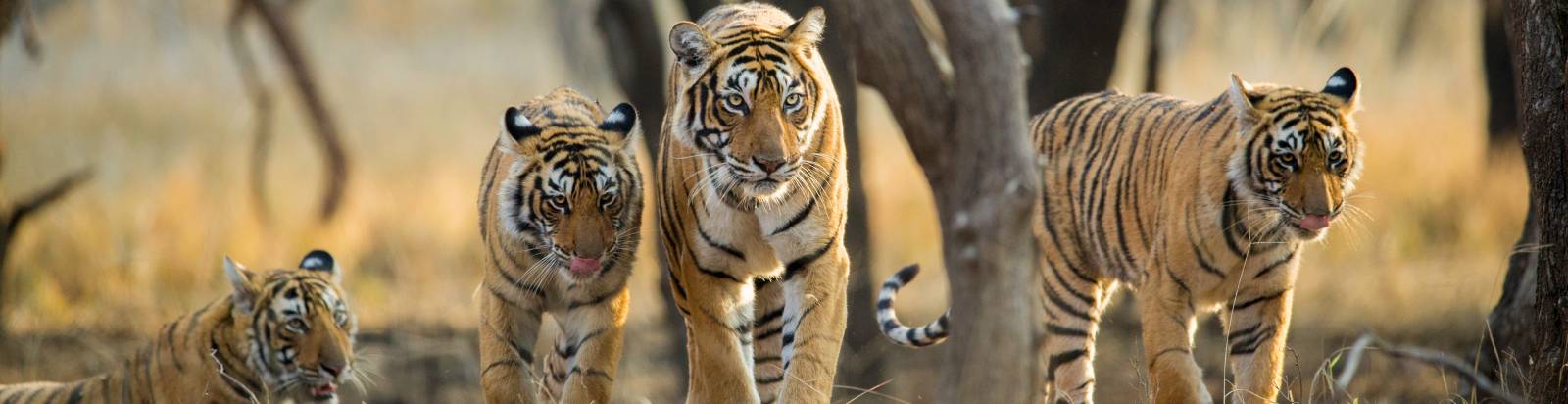
Continue to Ranthambhore, home to Bengal tigers and rich biodiversity,
for thrilling safaris.
Enjoy 2 jeep safaris through Ranthambhore National Park, increasing your
chances of tiger sightings.
Visit Fatehpur Sikri, a UNESCO World Heritage site, en route to Agra.
Marvel at the iconic Taj Mahal and the majestic Agra Fort.
This route offers a perfect mix of cultural immersion, wildlife adventure, and
architectural wonders.
Enjoy comfortable accommodations, guided city tours, and private transport
throughout.
Ideal for nature lovers, history buffs, and first-time visitors to India.
Seasonal experiences like bonfires, traditional dinners, and local markets
enrich the journey.
Tour Overview
- Duration: 8 Nights / 9
Days
- Destinations
Covered: Delhi → Jaipur → Ranthambhore → Agra → Delhi
- Theme: Cultural
heritage, wildlife safari, architectural marvels
- Ideal For: Families,
couples, solo travelers, wildlife and culture enthusiasts
- Best Time to
Visit: October to April (Ranthambhore park is closed during monsoon from
July to September)
✨ Tour Highlights
- Explore the
architectural wonders of Delhi Red Fort, Qutub Minar, India Gate
- Discover the
royal heritage of Jaipur Amber Fort, City Palace, Hawa Mahal
- 2 Jeep safaris in Ranthambhore
National Park, one of Indias best tiger reserves
- Witness the
eternal beauty of the Taj Mahal in Agra
- Enjoy local
markets, authentic Rajasthani food, and vibrant cultural performances
Itinerary
Day 1: Arrival in Delhi
- Arrival at
Delhi Airport / Railway Station
- Transfer to
hotel and check-in
- Evening at
leisure or optional visit to Akshardham Temple
- Overnight in
Delhi
Day 2: Delhi Sightseeing
- Visit: Red
Fort, Jama Masjid, Raj Ghat
- Drive past India
Gate, Parliament House, President's House
- Afternoon visit
to Qutub Minar, Humayun's Tomb
- Explore local
markets like Connaught Place or Janpath
- Overnight in
Delhi
Day 3: Delhi Jaipur (Approx. 280 km
/ 5-6 hrs)
- After
breakfast, drive to Jaipur (Pink City)
- En route stop
for refreshments and photography
- Check-in at
hotel and relax
- Evening
optional visit to Chokhi Dhani for Rajasthani dinner & cultural show
- Overnight in
Jaipur
Day 4: Jaipur Sightseeing
- Morning: Elephant
ride or Jeep ride to Amber Fort
- Visit City
Palace, Jantar Mantar, Hawa Mahal (Palace of Winds)
- Shopping in
Jaipur's famous bazaars (jewelry, textiles, handicrafts)
- Overnight in
Jaipur
Day 5: Jaipur Ranthambhore (Approx.
180 km / 3.5-4 hrs)
- Drive to
Ranthambore National Park
- Check-in at
jungle resort/lodge
- Afternoon at
leisure or optional village walk
- Enjoy bonfire
& dinner at the resort (seasonal)
- Overnight in
Ranthambore
Day 6: Ranthambore Jungle Safari
- Early morning Jeep
Safari in Ranthambore (Zone allocated by park authorities)
- Return to hotel
for breakfast and rest
- Optional nature
walk or relax by the pool
- Afternoon:
Second Jeep Safari for different zone/wildlife experience
- Overnight in
Ranthambore
Day 7: Ranthambore Agra via
Fatehpur Sikri (Approx. 260 km / 6 hrs)
- After
breakfast, drive to Agra
- En route visit Fatehpur
Sikri, the abandoned Mughal capital
- Continue to
Agra, check-in at hotel
- Sunset view of Taj
Mahal from Mehtab Bagh (optional)
- Overnight in
Agra
Day 8: Agra Sightseeing Return to
Delhi (Approx. 230 km / 4 hrs)
- Early morning
visit to Taj Mahal (best at sunrise)
- Visit Agra
Fort, and optionally Itmad-ud-Daulah's Tomb (Baby Taj)
- Drive back to
Delhi by evening
- Check-in at
hotel
- Overnight in
Delhi
Day 9: Departure from Delhi
- Transfer to
airport/railway station for onward journey
- Tour ends with
beautiful memories of India
Inclusions & Exclusions
✅ Inclusions
(Suggested)
- 8 nights
accommodation in well-rated hotels/resorts
- Daily
breakfast; meals in Ranthambhore (breakfast, lunch & dinner)
- 2 Private Jeep
Safaris in Ranthambhore
- AC vehicle for
all transfers & sightseeing
- English-speaking
guide in major cities
- All taxes and
tolls
❌ Exclusions
- Entry tickets
to monuments
- Personal expenses (laundry, tips, etc.)
- Travel
insurance
- Anything not
mentioned under Inclusions
Tour Policy
1. Booking Policy
- A minimum
deposit of 30% of the total tour cost is required to confirm the
booking.
- Balance amount
must be paid 15 days before the tour start date.
- Bookings are
subject to availability at the time of confirmation.
- Passport copies
(for international tourists) and valid IDs (for Indian citizens) are
mandatory at booking.
2. Payment Terms
- Payments can be
made via bank transfer, credit/debit card, or UPI.
- All prices are
quoted in USD $ (or as specified) and are subject to change without prior
notice.
- Any additional
charges due to currency fluctuations, taxes, or fees will be borne by the
traveler.
3. Cancellation Policy
- Cancellations
must be submitted in writing (email or official letter).
- Cancellation
charges:
- 30+ days
before travel: 10% of tour cost
- 15 days
before travel: 25% of tour cost
- 7 days
before travel: 50% of tour cost
- Less than 7
days: 100% (No refund)
- No refund for
unused services or last-minute changes by the traveler.
4. Ranthambhore Safari Policy
- Safari bookings
are subject to availability and are made as per government regulations.
- Safari zones
are allocated by the Ranthambhore Forest Department; specific zone
requests are not guaranteed.
- Full name,
gender, age, and ID details are required for safari booking in advance.
- Safari charges
are non-refundable once booked.
5. Travel Insurance
- Travel
insurance is highly recommended to cover cancellations, medical
emergencies, and baggage loss.
- The agency is
not liable for any health-related issues or accidents during the tour.
6. Child Policy
- Children below
5 years: Complimentary without extra bed (sharing with parents)
- Children aged
512: Charged at child rate (with/without extra bed)
- Above 12 years:
Charged as adults
7. General Terms
- Tour itinerary
is subject to weather conditions and operational feasibility.
- Any delay or
inconvenience caused due to natural calamities, traffic, or government
restrictions is beyond our control.
- The agency
reserves the right to modify the itinerary or hotels for the benefit and
safety of the group. E-Visa Information HISPANO INDIA TRAVELS
Entering India by air or land is relatively straightforward, with standard immigration and customs procedures. A previously frustrating law barring re-entry into India within two months of the previous date of departure has been done away with (except for citizens of some Asian countries), thus allowing most travelers to combine their India tour with side trips to neighboring countries.
PASSPORTS
To enter India you need a valid passport and an onward/return ticket, and a visa. Note that your passport needs to be valid for at least 180 days after your entry into India, and should have at least two blank pages. If your passport is lost or stolen, immediately contact your country’s representative. Keep digital photos or photocopies of your airline ticket and the identity and visa pages of your passport in case of emergency.
VISA
Required for most visitors; e-Visa (valid 60 days) available for more than 150 nationalities. Longer trips require a standard six-month tourist visa.
FURTHER INFORMATION
Apart from citizens of Nepal, Bhutan and the Maldives, who don't need visas for India unless they are arriving from mainland China, and citizens of Japan and South Korea, who can obtain a visa on arrival, everyone needs to apply for a visa before arriving in India. However, more than 150 nationalities can obtain the wonderfully hassle-free 60-day e-Visa.
There's also a six-month tourist visa, which is valid from the date of issue, not the date of arrival in India.
E-VISA
· Citizens from more than 150 countries can apply for an e-Visa (www.indianvisaonline.gov.in/evisa).
· You must apply a minimum of four days and a maximum of 120 days before you are due to arrive in India.
· The visa will be valid from your date of arrival in India.
· It's a double-entry visa that lasts for 60 days from your first date of entry.
· To apply, upload a photograph as well as a copy of your passport; have at least 180 days' validity in your passport and at least two blank pages.
· If your application is approved, you will receive an attachment to an email within 72 hours (though normally much sooner), which you'll need to print out and take with you to the airport. You'll then have the e-Visa stamped into your passport on arrival in India.
· Note that the e-Visa is also sometimes referred to as a 'visa on arrival', though you need to apply for it before you arrive.
· E-Visas are only valid for entry through 26 designated airports: Ahmedabad, Amritsar, Bag Dogra, Bengaluru (Bangalore), Chennai, Chandigarh, Coimbatore, Delhi, Gaya, Goa, Guwahati, Hyderabad, Jaipur, Kochi (Cochin), Kolkata, Kozhikode (Calicut), Lucknow, Madurai, Mangalore (Mangalore), Mumbai, Nagpur, Pune, Trichy (Tiruchirappalli), Thiruvananthapuram (Trivandrum), Varanasi and Visakhapatnam.
· They are also valid for arrival at five designated seaports: Kochi, Goa, Mangalore, Mumbai and Chennai.
· E-Visa holders can, however, leave India from any authorized immigration checkpoint.
ENTRY REQUIREMENTSVisas are available at Indian missions worldwide, though in many countries applications are processed by a separate private company.
· Student and business visas have strict conditions (consult your Indian embassy for details).
· A standard 180-day tourist visa permits multiple entry for most nationalities.
· The 60-day e-Visa is usually a double-entry visa.
· Five- and 10-year tourist visas are available to US citizens only under a bilateral arrangement; however, you can still only stay in the country for up to 180 days continuously.
· Currently you are required to submit two digital photographs with your visa application (format jpeg 10kb–300kb), though only one for the e-Visa.
· An onward-travel ticket is a requirement for some visas, but this isn’t always enforced (check in advance).
· Visas are priced in the local currency and may have an added service fee.
· Extended visas are possible for those of Indian origin (excluding those in Pakistan and Bangladesh) who hold a non-Indian passport and live abroad.
· If you need to register your visa (for stays of more than 180 days), or need a visa extension (only granted in exceptional cases) or a replacement for a lost passport (required before you can leave the country), then you should apply online at https://indianfrro.gov.in/eservices/home.jsp.
· If you need to see someone in person about your visa issue, then you should do so at the Foreigners’ Regional Registration Office in Delhi.
· Check with the Indian embassy in your home country for any special conditions that may exist for your nationality.
RE-ENTRY REQUIREMENTS
The previous rule of no re-entry on the same visa for two months after leaving India no longer applies to foreign nationals (except nationals of Afghanistan, China, Iran, Pakistan, Iraq, Sudan and Bangladesh, foreigners of Pakistani and Bangladeshi origin, and stateless persons). E-Visas can now be used for double entry into India.
VISA EXTENSION
India is extremely stringent with visa extensions. At the time of writing, the government was granting extensions only in circumstances such as medical emergencies or theft of passport just before the applicant planned to leave the country (at the end of their visa).
If you do need to extend your visa due to any such exigency, you should first apply online at e-FRRO (https://indianfrro.gov.in/eservices/home.jsp), which also deals with replacements for lost/stolen passports (required before you can leave the country). If you need to see someone in person, or are called in for an interview, the place to go is the Foreigners’ Regional Registration Office in Delhi. There are also some regional FRROs, but these are even less likely to grant an extension.
Assuming you meet the stringent criteria, the FRRO is permitted to issue an extension of 14 days (free for nationals of most countries; enquire on application). You must bring one passport photo (take more, just in case), your passport (or emergency travel document, if your passport is missing), and a letter from the hospital where you're having treatment if it's a medical emergency. Note that this system is designed to get you out of the country promptly with the correct official stamps, not to give you two extra weeks of travel and leisure.
TRAVEL PERMITS
Access to certain parts of India – particularly disputed border areas – is controlled by a system of permits that applies mostly to foreigners but also to Indian citizens in some areas.
Permits are required to visit Arunachal Pradesh, Sikkim and certain parts of Himachal Pradesh, Ladakh and Uttarakhand that lie close to the disputed border with China/Tibet. A permit is also necessary for travel to the Lakshadweep Islands and to some parts of the Andaman Islands.
In Odisha, permission is no longer required to visit tribal regions, and there’s nothing to stop tourists from taking a bus or taxi to visit regional markets, but some villages are off limits to visitors (due to potential Maoist activity), so seek local advice before setting out.
Obtaining a permit is usually a formality, but travel agents must apply on your behalf for certain areas, including many trekking routes passing close to national borders.